Non-vebal Films


The non-verbal films listed on this website form a set of films that have no dialogue, no narration, no subtitles, no plot, no actors and no script. These films paint a picture, or provide a journey through vision and music alone.

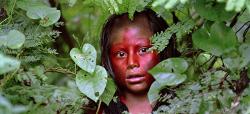
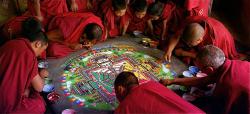
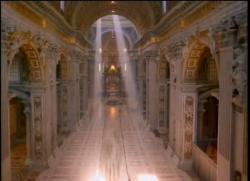
Baraka

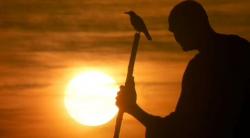
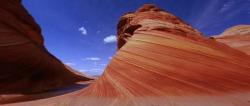
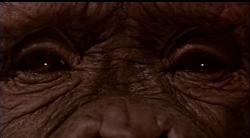
Baraka is an incredible nonverbal film containing images of 24 countries from 6 continents, created by Ron Fricke and Mark Magidson, with music from Michael Stearns and others. The film has no plot, contains no actors and has no script.  Instead, high quality 70mm images show some of the best, and worse, parts of nature and human life.  Timelapse is used heavily to show everyday life from a different perspective.  Baraka is often considered a spiritual film.

Baraka is now available on Blu Ray DVDRead more >>>

Baraka0479

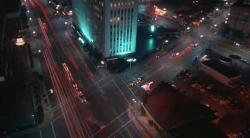
Koyaanisqatsi

Koyaanisqatsi is director Godfrey Reggio's debut as a film director and producer. Koyaanisqatsi is the first film of the Qatsi trilogy, and was released in 1983. Koyaanisqatsi was the first full-length commercial nonverbal film. Koyaanisqatsi cinematographer and editor Ron Fricke captures 90 minutes of stunning visual images of North America, set to a moving score composed by Philip Glass .Read more >>>

KoyanisB015

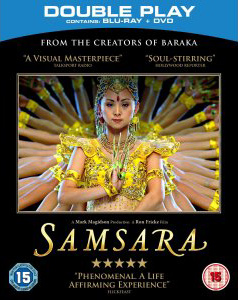
Samsara

Samsara is Ron Fricke 's sequel to Baraka.  Samsara is currently in production. Shooting commenced in 2007.

Current status:  Principal shooting is complete.  The Samsara production team suggest Samsara will be ready in 2011.

Read Samsara press releases.

If you would like to receive information about Samsara when it becomes available sign up for the newsletter using the box in the right hand side of this web page -->Read more >>>

Samsara Preview Image

Chronos

Chronos , "An incredible visual-music journey through time", released in 1985, 40 minutes.
Chronos was Ron Fricke, Mark Magidson, Michael Stearns and Alton Walpole's first collaboration.

Chronos is a very positive film showing beauty from around the world. Chronos has the feel of Baraka, yet its content is often more about how the subject is shown/filmed instead of the subject itself. But don't let that put you off, I think Chronos is greatly underrated. The incredible time lapse sequences, concepts and techniques clearly being the seed for Baraka.Read more >>>

Chronos Image

Laya Project

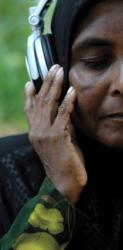
Laya Project is a non-verbal film dedicated to the survivors of the 26th December 2004 Asian tsunami.  Laya Project is a musical and visual journey through coastal and surrounding villages in the path of the December 2004 tsunami in Indonesia, Sri Lanka, Thailand, India, Myanmar and Maldives. 

The film uses music and singing as the common language of all of the people and communities featured.  There are some spoken words in the film, translated with subtitles.Read more >>>

Laya Project

Dogora

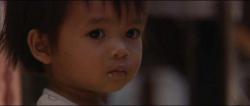
Dogora is a film capturing the lives of the people of Cambodia.  Dogora was created by Patrice Leconte, and is currently only available on a French release.  Dogora has not plot, actors or script.  Dogora is similar in style to Baraka and Koyaanisqatsi.

Dogora captures the daily routines of the people of Cambodia.  Dogora is a street level documentary, without any explanation.  Your imagination must answer any questions you may have.  Dogora captures the interaction between the people of Cambodia very well.  Particular attention is paid to the children of Cambodia, which prove a fascinating subject.Read more >>>

dogora0096

Highway World

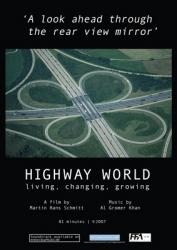
Highway World is a non-verbal film from filmaker Martin H. Schmitt. 

From Martin's website:Read more >>>

Highway World Poster

Winged Migration

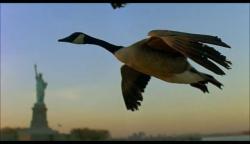
The Microcosmos team return with Winged Migration, a stunning film that follows the migration of birds. The content is interesting, and extremely well shot.Read more >>>

Mig0812

Savage Eden

Savage Eden, is a proposed film by Godfrey Reggio, Philip Glass, Ron Fricke and George Meyer.  Savage Eden will be a film of "narrative and non-narritive cinema".  A combination of elements will be combined to deliver a film in a different manor to the teams previous work.

Godfrey Reggio and Ron Fricke last worked together on Koyaanisqatsi.  Whilst Philip Glass has made regular contributions to Godfrey Reggio's films.  It is interesting to hear of Godfrey Reggio and Ron Fricke involved in a project together.

Qatsi Trilogy

The Qatsi trilogy consists of the following three films

When Koyaanisqatsi was devised and created Godfrey Reggio did not imagine making a trilogy.  It was only after Koyaanisqatsi was completed that Godfrey Reggio and composer Philip Glass thought of extending the film into a trilogy.

Powaqqatsi

Powaqqatsi, Godfrey Reggio's sequel to Koyaanisqatsi , Released in 1988, 99 minutes.
Powaqqatsi is the second part of Godfrey Reggio's Qatsi trilogy.

Powaqqatsi concentrates on people of the developing world. Images from Brazil, Egypt, Hong Kong, India, Kenya, Nepal, and Peru make the film a good contrast to Koyaanisqatsi.  Powaqqatsi concentrates more on people and less on their creations or surroundings than in Koyaanisqatsi. 

The images are beautiful and show the people of the developing world in a great way.  The different colours found in South America, Asia and Africa are more vivid when shown in films such as Powaqqatsi.  The insight into the everyday lives of these people is excellent.  Powaqqatsi nearly puts you close enough to smell the cooking food, fresh fish and nearby fires.  Read more >>>

powaqqatsi1477

Naqoyqatsi

Naqoyqatsi, Godfrey Reggio's third part of the Qatsi trilogy.
Naqoyqatsi is he final part of the Qatsi trilogy, in which Godfrey Reggio expresses technology and more modern times.
Different in content to Koyaanisqatsi and Powaqqatsi

Naqoyqatsi has been made many years after the rest of the films features in this web site.  Due to legal reasons Naqoyqatsi was delayed as the legal rights over Koyaanisqatsi where resolved.  Godfrey Reggio clearly wanted to make Naqoyqatsi different to Koyaanisqatsi and Powaqqatsi.Read more >>>

naqoy153

Microcosmos

Microcosmos, Claude Nuridsany and Marie Pérennou's incredible film of a meadow on a summers day, released in 1996, 84 minutes. In Microcosmos the animal world is bought to life with the aid of 'Macrovision ' and specially adapted cameras.  In Microcosmos the images are so good that you have to remind yourself that this is real life, and this happens every hour of every day.

Microcosmos provides romance, chivalry, humor, drama and a unique look at entomological eroticism. 15 years of research, 2 years of equipment design, 3 years of shooting, Microcosmos shows that you don't have to turn to science fiction to find an alien and unimaginable world.Read more >>>

Micro0477

Genesis

Genesis is a film about mother eath.  The makers of Microcosmos and Winged Migration continue their theme in Genesis, showing beautifully shot images of the worlds creatures. 

Genesis paints a picture of how the world was created, and what creatures live on it now.  The images are dazzling, as with the pairs other films.  Images include The Galapagos Islands, Madagascar and Iceland.  Many of the animals are shown in amazing detail.  Allowing one to see what would normally be missed.Read more >>>

Fascinating Nature

Fascinating Nature is a nonverbal landscape documentary film of images from around the world.  Fascinating Nature was created by Gogol Lobmayr and is known as Faszination Natur in Gogol's native Germany. 

Content

Gogol Lobmayr has made the effort to travel to locations that many other film makers have not.  The iceberg and erosion formations are stunning, and I have not seen any images like these before.  There is a very broad range of locations, from deep in the desert, to prairies, to mountains, to glaciers.  The film is presented in a series of chapters, once chapter for each country or region.  Each chapter has a caption introduction.Read more >>>

fasnat1278

Atlantis

Atlantis is a film containing underwater images of the animals in the sea.  Atlantis is a nonverbal film and the cinematography is outstanding.

Directed by Luc Besson, who is better known for his Hollywood movies, Atlantis expands the nonverbal genre by adding another animal related film, but one that is different is style to Microcosmos or Winged Migration.  Atlantis, helped by its subject, is very smooth in style.

The film has distinct chapters, each one with a different theme, and a brief introduction.  Despite this the film flows fell, helped by the consistent colors and theme.  Although there is limited scope for a nonverbal underwater film, Atlantis moves well and fans of the nonverbal film genre will enjoy the film.  Read more >>>

Atlantis

Anima Mundi

Anima Mundi is a film about animals.  It contains no actors, has not plot and has no script.  Anima Mundi was created by Godfrey Reggio who also created Koyaanisqatsi.

Anima Mundi was commissioned by the Italian jewellery company Bvlgari, for the World Wide Fund for Nature which used the film for its Biological Diversity Program.  The breathtaking images of nature where intended to make the viewer feel that they where part of the natural world.  Philip Glass provided the musical score in Anima Mundi, as with all of Godfrey Reggio's films. Read more >>>

animaMundi00310

Contribute

DonateIf you've enjoyed this website please buy me something from my Amazon.co.uk Wishlist


This website is made with love, and does not make any money.  Anything received from my wishlist will help to make the website better,  Thanks, Darren.

Newsletter

Sign up to get our newsletter with the latest films, DVDs and news from the world of non-verbal film

Syndicate content

National Geographic Magazine

Enjoy the magazine that inspired all of the films on this website. Delivered to your home for a fraction of the cover price.